
Find out who you are
Find out who you are and do it on purpose with purpose. This was a fantastic piece of advice given by the late, great Dolly Parton. Now, at least as far as I can tell, Dolly Parton was never involved with the divination arts. She was a country music singer, a movie star, and a philanthropist, a millionaire that could have been a billionaire. And she gave this advice without cards, without dice, without any sort of gimmicks in front of it. Only the will and desire to see other people become the best versions of themselves. At the heart of the divination arts is this same goal. And while we may dress it up with whatever props or tools that we bring to the table, this is really the heart and soul of why we do what we do.
So, on this episode of The Art of Divination Podcast, I would like to explore the art of giving advice. And I suppose this makes this the most meta episode I've done yet because it's advice on how to give advice. So sit back, relax, and join us as we explore the art of divination.
Why I say divination arts, not fortune telling
Welcome to The Art of Divination Podcast presented by Artisan Tarot. I'm your host, Z. Mann Zilla.
On this episode, we'll be discussing the very heart and soul of the divination arts, giving advice. Now I'm sure many of you have noticed that I tend to use the term divination arts instead of fortune telling, and the reason for this is because I don't consider the two terms to be interchangeable exactly. Fortune telling is an explicitly spiritual practice, whereas divination arts don't necessarily have to be.
And if this seems like splitting hairs to you, keep in mind that I'm also a professional wrestling fan, I'm sure I've brought it up from time to time. And I often like to joke that professional wrestling and the divination arts have a lot of things in common. Both lean heavily on the wall between fantasy and reality, and both have both fan bases and hecklers who loudly misunderstand this. And they're really not unique in that aspect. Think for a moment about stage magic, right? We go to see a stage magician perform their act, and most of us, I think, are very aware that what we're seeing on that stage is not actual wizardry. However, there will inevitably be somebody that has to lean over and explain that, oh, it's just a trick, right?
Like we're not tuned in. This presumption also happens a lot in professional wrestling. I'll be enjoying what I'm watching on the screen, enjoying the storytelling and the athleticism of it, and there will always be somebody that wonders what I see in it because it's so fake. The divination arts has a similar PR problem. Here we are engaged in an art form designed around giving affirmations and life advice, while there are hecklers and naysayers and outsiders who look at what we're doing and say something like, what you're doing is the work of the devil, or what you're doing is completely a scam. The takeaway I have with that is that these are people that are misunderstanding what the divination arts really are about. Again, I'm going to compare things to professional wrestling.
In professional wrestling, you are using the framework of an athletic competition to tell a story. It is a storytelling craft with athletic elements. The divination arts are a very similar thing. It's improvisational advice crafting, and there is a framework, a layer on top of that of the fantastic. And while, yes, there's people that are immediately checked out on that surface level, what you have to understand is that some people, even if they see the whole picture, aren't really into the whole thing. And you know what? That's fine. It's hardly unique. Trainspotting, stamp collecting, fixing your car on the weekend. Some people think this is fun while others look at it and wonder what they see in it.
You're not doing it for the hecklers
So, as we talk a little bit about advice giving, the first piece of advice I would have for you is understand that you are not doing it for them. You do not have to impress them. I think of it as the Mike Nelson rule. This is named after Mike Nelson, who is one of the writers and hosts of Mystery Science Theater 3000.
And when asked if he was ever worried that people wouldn't get the jokes, his response to that was the right people will get it. The divination arts aren't for everybody, and that's fine. But if they are for you, then it is important to note that the heart and soul of what makes the divination arts so fascinating is the part where we're giving advice. We're just finding a fun and entertaining way to do it, and that is not at all unprecedented.
Parables and fables
For as long as there has been recorded history, there have been parables and fables. Here's an interesting piece of trivia I discovered while researching this episode. The difference between a parable and a fable has to do with what the story itself is about. Parables, they're very grounded. They tend to be about people doing real, relatable things. You know, there's no real elements of the fantastic going on there. They're just stories about people doing people stuff. Fables, on the other hand, have a wider latitude to be fantastic. They may involve talking animals or magical situations, things of that nature.
But both types of story have a goal in mind, which is to pass on a piece of knowledge that may be helpful to the people that hear them, a form of giving advice in an entertaining way. If you add a little bit of flair, a little of the old razzmatazz to the advice that you give, it makes it more memorable, helps it stick better. Indeed, it's a lot of these fables that we think of that make their way into the divination arts. When you're, for example, looking at the cards in your deck and they remind you of a story. That story that you're being reminded of is reminding you also of the moral lesson attached to it.
The first advice columns
However, when we get to this section, I do like to give just a little bit of history. And, in other episodes, I've certainly gone into the history of other divination arts, and since advice giving basically applies to all divination arts, there's really no reason to focus like that here. So instead, let's focus on one of the more straightforward forms of giving advice directly from one person to another as an entertainment medium, the advice column. The first formally recognized example of an advice column was published in 1691 in a London periodical called The Athenian Mercury. Writer John Dunton formed an Athenian Society, which was said to have many members, but to date we can only confirm there were four. Himself, a math teacher named Richard Sault, a philosopher by the name of John Norris, and a clergyman and poet named Reverend Samuel Wesley.
And I love that from the very inception, advice columns had this layer of fiction where, oh, we have all of these experts that are involved. No, it's just these four. But adding that air of gravitas made the whole thing more appealing, which was evidenced by the numerous people that would write in to this advice column asking all sorts of questions and receiving answers from the Athenian Society. Further backed up by the overwhelming popularity of this new format.
In fact, it was so wildly popular that within five years the market was just saturated with imitators, and the Athenian Mercury was actually having a hard time being recognized in a genre they created. One such derivative work, first appearing in the early 1700s, was A Review of the Affairs of France, or rather, that was the periodical it was published in, but it was an advice column where people could ask questions to a group called the Scandalous Club. And we have even less information about the membership of the Scandalous Club than we do of the Athenian Society, and likely it was, you know, just some folks that worked on the newspaper, but they would accept questions about things that were going on in high society, and they would offer their answers and speculation. But this was not quite an advice column thing; this was more like rumors.
Agony aunts and Dear Abby
However, another style of advice-based column was emerging: so-called agony aunt articles, which were single authors responding to questions. A person would write in directly seeking advice for themselves from another person. The first so-called agony aunt was British editor Delarivier Manley, and it was the format of her column that would end up being the norm for advice columns, eventually culminating into Dear Abby. And of course, Dear Abby is the most popular example of the format. It's the one we all immediately think of when we think advice column.
It was first started in the 1950s by a woman named Pauline Phillips, who wrote the column herself until the late 80s. After that, she co-wrote it with her daughter up until her death in 2013. However, very recently- in fact, I believe it was August of 2026- the members of the Phillips family stepped away from the column entirely. They still retain ownership, but the column is no longer being written by any of them. The advice is now being given by an editorial staff using the same pen name.
So now, ironically, Dear Abby is sort of a reverse Athenian Society. Wholeheartedly reinforcing my theory that advice as an entertainment medium having a layer of fiction on top of it is a thing. It's always been a thing, and for that matter, a wildly popular thing. The true value of advice-giving, and indeed the divination arts, is in giving advice because people want to receive advice. But why? Why do people seek advice? Let's explore that.
Why people seek advice
Now, chances are you've probably got an answer in your head for that question that I ended the previous chapter with, and it's probably a very simple one, because if you want to know something, you ask someone. And yes, this is certainly true, but it doesn't explain the appeal of why people were seeking advice from advice columns, radio shows, or for that matter, fortune tellers and divination artists. It also doesn't really give us any solid answers for why these mediums are so popular to consume for those that aren't looking for advice.
So I'd like to go ahead and take just a little time here to explore my theories at least. And let's start at the back end, exploring why somebody would want to consume this content even if they don't participate. One thing is that perhaps they're waiting for somebody to ask a question that they themselves would like to ask, so they get all the benefits of getting the advice without having to reveal anything about themselves or be vulnerable. I'm sure there's also an aspect of voyeurism in all of that, sort of the same thing that keeps people coming back to reality shows. I think there's also a vicarious angle to it. You know, many people when they watch sports become so-called armchair quarterbacks where they discuss how they would have done the play better or how they would have called it.
I'm sure many people listen to advice shows with that same mindset, mentally giving the advice or even verbally to anybody that's listening with them, giving the advice they would have given in that situation.
The audience behind the question
The reason I think that this is an important thing to explore is because when we're doing the divination arts, we have to remember we're not always just giving advice to the person to whom we're giving advice. Sometimes we're talking over their heads to an audience. And I think that is an important thing to keep in the back of your mind, especially if you're like me and you do any sort of public-facing demonstrations of your craft, be it digitally on YouTube or Twitch or TikTok or in person at a psychic fair or, you know, something like that.
Being listened to
But what do we suppose the individual we're reading for is getting out of it? Now some are gonna be true believers in the craft. And as a secular reader, that is a possibility I like to be aware of. I like to have respect for people's personal beliefs. They aren't necessary for what I do, but they are necessary for what they are seeking, and I respect that. However, there are just as many people looking for something else, often a human connection. Some are seeking validation, someone to hear them out and hear the problem that they're having and help them come to terms with it, help them understand that they're not alone. Sometimes all you need to know is that a problem you're having is a completely normal human problem to have, and there are people who empathize with you and possibly even have some advice on how to deal with it.
But that core validation is still important. Other querents have let me know that their divination readings are a form of therapy for them, and as we've discussed in previous episodes, the divination arts are finding their way into many therapeutic techniques. And on a related note, the divination arts provide a way for people to be listened to. You may remember during the episode about tarot scams where I talked about how the scam of the Miss Cleo and Psychic Friends Network thing was all about keeping people on the phone as long as possible. What I didn't bring up during that episode is that this is primarily why the elderly were targeted, especially with a lot of the mailers they were sending out. It turns out elderly shut-ins will, in fact, pay $4 a minute just to have somebody to talk to.
But you don't necessarily have to be a shut-in or somebody that has fallen off the face of anybody's observation due to neglect or death or anything like that. It doesn't necessarily have to be that tragic. Because ultimately we all have a need to talk about ourselves to someone else, and that's natural. So while my intent when I'm giving readings is to give the best advice possible, I also leave myself open to that possibility. And honestly, I'm glad I can provide that for other people. I'm glad I can be a source of empathy. And the best part about empathy is that you don't really have to learn any additional skills per se. Because really the best thing you can do in that situation is to just listen. But I'm getting slightly ahead of myself.
Eight rules for giving advice
It's time now for me to give you my advice on giving advice. So I just like the idea of there being eight rules for something. I also, as you know, I'm a big fan of Eastern philosophy, and eight is considered a perfect number. So I'd like to present to you my eight rules for giving advice.
Now, they're not exactly rules; they're more like suggestions, and honestly, I have more than eight, and I've just sort of compressed them down into these little buckets to make that number eight. But I do hope they help you as much as they've helped me in my practice.
Rule one: divination is a performance art
Rule number one: divination is a performance art. Now, this isn't the same thing as saying it's fake. Go ahead and add another notch to that little tally that says Zilla mentions professional wrestling in the context of tarot because I'm about to do it again. Professional wrestling stories are indeed prescripted, but the athleticism that they are doing in that ring is real. They're just pretending to be in a fight to tell the story. The story is the goal. The fighting is just a means to that end. It's the same thing for divination arts. The goal is to give that good advice. The delivery method is your cards and your dice and your bones and whatever divination tool you have to hand. And to get the most out of that art, what you're trying to do is perform your advice as boldly as possible. Make it as memorable as you possibly can. This is what elevates simple advice-giving into an art.
Rule two: a future, not the future
Rule number two: it's a future, not the future. Now, by the way, have you ever had somebody ask, well, if this is really what's going to happen, why don't you go ahead and pull the cards again, and they should come up the same? And there's actually a very reasonable answer to that, which is that the very act of seeking advice changes the outcome of your fortune.
Because now you're in the universe where you asked for that advice from a divination artist, whereas before you came in, you weren't. But all of that is to point out that the future is not set in stone. Readings can only extrapolate the outcomes of a situation, specifically before the reading and not after.
So what I like to explain to my querents is that what I'm reading for you is a future, not the future. First off, if the future were immutable, then divination would be entirely pointless. Why get a reading about something you can do nothing about? But secondly, what we're doing at best is forecasting the weather.
So you have to make the decisions as the querent to decide if this is the future you want to be in, or to make the choices to avoid it.
Rule three: the best advice is actionable
Rule number three: the best advice is actionable advice. I like to say a prophecy of tea in your future becomes self-fulfilling if the advice you give is to place tea leaves in boiling water. Or another example: if you tell somebody that their fortune is to someday receive a pot of gold, then they're just going to sit there and wait for the pot of gold. Whereas if the advice you give is, ah, you're seeking a pot of gold, well then here's some steps to get one, then the querent is actually doing something with the advice you're giving them. Far too often, it seems, I'll watch readers who will go off on one about energies or astrological signs, angel energies, or reclaiming some sort of an energy.
It's often energy. And what the querent is left with is a lot of affirmations, but no, really, no sense of direction. They're not given anything to do. They're given this idea that they can just, you know, sort of sit there and meditate and concentrate on these energies rather than being an active participant in their own solutions. So I give direct actionable advice whenever possible to try and avoid this.
Rule four: stay in your lane
Rule number four: stay in your lane. Now, before I start every reading, and whenever I'm reading on Twitch, I will put a message on the screen that says I do not give medical or legal advice. That is because I am neither a doctor nor a lawyer. If you would like a tarot reading about your medical diagnosis, get your tarot reading from a doctor.
Now, that isn't to say you can't comment on possible contextual or surrounding outcomes. Like, for example, how will this affect my relationship? Will this endanger my job search? Things of that nature. But you know, responding directly to a diagnosis or a legal case, that's problematic. And what I say is, go ahead and stay in your lane; only give advice about things that you understand. Even if you believe your practice to be divinely inspired, understand that an angel is probably not cramming a medical dictionary into your head so you can use the correct terminology. And on a realistic level, you don't know what you don't know. So for your advice to be good, it has to come from a place of at least some light experience with the topic.
Rules five and six: be compassionate, and lead them
Number five, be compassionate. Have enough empathy to read the querent's intentions, desires, and goals well enough to give them the experience that vibes with them the best. And the best way to do that, we've already discussed it. Listen to them. Listen first; only respond to what you've heard, and only in the spirit it was told to you.
And if you're not 100% sure how to do this, then well, you've heard me go on about shuffle banter before. That's, you know, whenever you're doing setup, like, you know, shuffling your cards, setting up the spread, whatever it is you're doing, you're having a conversation with your querent, right? This is an ideal time to ask questions and help them fill the space with their answers. It's a win-win situation. Rule number six: if you can lead them, do that.
Now, this one might take a little bit of practice if you're new at it, but the best advice you can give is the kind where the recipient feels as if they've arrived at the conclusion by themselves. See, if they're the ones having the aha moment, then your work here is done. You don't have to convince them of the viability of that answer. Some ways of doing that, for example, would be to let them contribute to the reading. If they see something in the spread and say, oh, this reminds me of X or this is making me think of Y, then you go along with that. Go ahead and pull that thread, see how far it goes. In a way, it's helping them give themselves good advice, which is a great way to help somebody in the long run.
Rule seven: be careful
Rule number seven: be careful. Now, as I've said a couple times in this episode, divination is a performance art. It's, in fact, rule number one. But as Lydia Deetz once said in Beetlejuice, this is my art, and it is dangerous. First of all, we already talked about how sometimes you are not just performing for the advice seeker; you are performing for an audience, anybody else that's watching.
So if your advice is not good, if your advice is not compassionate, if your advice advises somebody to do something that is clearly unsafe or bad, then lots of people are gonna know about it. And even if it is a one-on-one session, your practice lives and dies on word of mouth. And on that note, another reason you would want to stay in your lane, according to rule four, is because of liability. If somebody does something wildly illegal or immoral on advice that you gave, you can be held liable for that. So just be aware of those risks and protect yourself.
Rule eight: never read angry
And rule number eight: never read angry. In my opinion, it is better to cancel an appointment or cancel a stream or cancel a booking than it is to go into a reading carrying any sort of anger or depression or heavy thoughts. For one thing, a performance art relies on you being able to perform. Secondly, your querents may be very vulnerable at that time, and you don't want to burden them further. Don't make your querents walk out of the session with more baggage than they came in with. Meditation or similar mindfulness exercises can certainly help you with this.
But you also have to be willing when you are too psychically or emotionally or mentally injured to give a good reading. See, that be compassionate rule applies to you too.
The golden rule
So these are what I consider my eight basic rules, right? But there's one more I want to talk to you about, and it's what I think of as the golden rule. Let's wrap up with that one. Now, this episode has been about giving good advice, but as we discussed, some people get these readings or consume your content not because they need any sort of advice, but for other reasons like companionship or validation or just to have something on to watch.
And I know in my own Twitch streams, I'll have people who participate that don't even really want advice. They just want to feel like they're part of the activity, right? And in those situations, you may find yourself sort of on a wrong foot because you're like, how can I give advice to somebody that isn't really looking for advice? Does it even matter if the advice is good? I find it's a lot less likely that you're gonna worry about that if you think of things in terms of what I've come to think of as the golden rule. And the golden rule is: divination arts are a storytelling craft. Before each reading, there's a little phrase I say to myself mentally in my head, and it goes like this.
I'm gonna tell you a story, and this story is about you. So this way, rather than thinking of myself reading a person's fortune or telling their future or whatever, I'm telling them a story where they're a character in it. See, stories have set tropes and structures; there's a lot of different ways that stories play out, but by and large, they follow the same basic rules. You know, there's a setup, there's some rising tension, we come to a climax, and then a resolution.
And as we discussed earlier, some of the earliest forms of advice were given in the form of stories, parables, and fables. So if you find that you're stuck, then the process there is look at the cards, determine what advice the cards are telling you to give the querent, and then just tell a story where the querent is following that advice to success. Or perhaps that they are using this information to avoid a catastrophe.
Now I'm certain I'm gonna be doing an episode at some point about how to incorporate storytelling techniques into your readings. But if you're looking for some good places to start in your own research, I would suggest The Hero with a Thousand Faces by Joseph Campbell, as well as The Castle of Crossed Destinies, which I brought up during the Tarot de Marseille episode. Definitely go back and listen to that one if you want to understand why I brought that one up.
And if you check out www.artisantarot.com and go to the membership section, you'll find that I've done a lecture series called How to Read Anything, and there's at least three chapters of that that deal in some way or another with using story craft in your readings. In fact, that entire lecture series has a lot of things that relate to what we've talked about today, so I can highly recommend it, and not just because I'm in it.
When nobody wants advice
But really, the problem you're trying to solve here is one of structure. If all you're trying to do is give advice, you're gonna find yourself on the wrong foot when the person is looking for something other than advice. An example that occurs to me off the top of my head is a lot of times when I'm doing my free reading streams, we'll get some folks in there that are kind of jokers. They're not taking things very seriously; they're participating because it's a free thing to participate with on the internet. Some will ask silly questions like what should I set my ringtone to, or what should I have for dinner. And others will even put on little characters like, you know, what should I do when I'm, like, doing this big business deal that they're very heavily implying is some sort of a crime, like they're playing a Grand Theft Auto character at me or something.
If the only reason I was there was to give advice to people, then this would be wasted time. There's no way I'm giving advice to somebody pretending to be Tony Montana or somebody that can't decide pizza or burritos for dinner, there's no way I'm giving them any sort of actionable advice that helps them or anybody else watching.
But instead, if I'm telling a story, then we're all getting something out of it. All I have to do is take the subject matter they've given me, apply the advice that's on the cards, and turn that into an interesting parable that's gonna stick with everybody. So even in a situation where nobody's asking for advice in good faith, you can still give good advice. And who knows, it may be the thing that sticks with them and helps them find out who they are so they can do it on purpose with purpose. Thank you, Dolly, and rest in peace.
Closing and where to find us
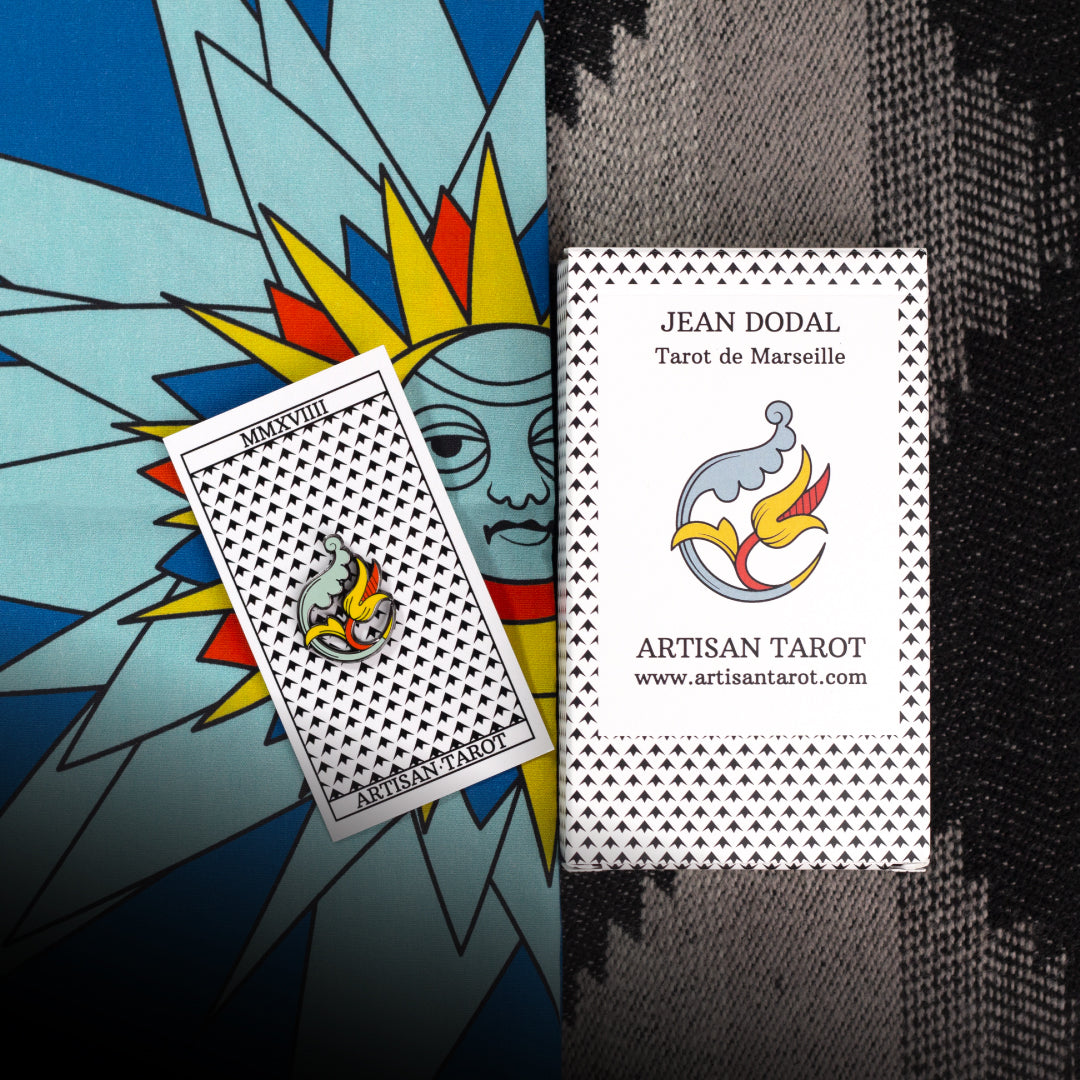
This has been The Art of Divination Podcast, presented by Artisan Tarot, publishers of both historical and modern tarot decks, and your one-stop shop for all things metaphysical. Look for many of the items we discussed today at www.artisantarot.com.
As for myself, I've been Z. Mann Zilla, and you can find more about me at www.Pandangit.com. I wish you all the best of luck on your own divination journeys. Happy reading, and thank you for your time.