
Every journey starts somewhere
Every journey has to start somewhere, which means that every tarot journey starts somewhere. Every divination journey starts somewhere. Every podcast journey starts somewhere. It's probably a good thing that this is the very first episode we're doing then. This one's about getting started with the divination arts. So if you're just getting started, or you know somebody who is and you're trying to help them out, this will be a great episode to listen to. So why not sit back, relax, and join us as we explore the art of divination.
Tarot is one divination art among many
Welcome to The Art of Divination Podcast presented by Artisan Tarot. I'm your host Z. Mann Zilla. This episode will be a quick-start guide to the divination arts, what they are, how they basically work, and how to get you started on your own divination journey with Tarot.
Now, I like to consider myself a divination artist. There's people that will say, Well, isn't that just Tarot? It's like, well, Tarot is a divination art, but it's far from the only one. For starters, it's not even the only one that uses cards. The Lenormand system is out there, for example. Not to mention the recent rise in popularity of Angel and Oracle decks, which are specifically designed for divination. For that matter, there's not even only one kind of tarot. There's Tarot de Marseille, there's the modern what we call Rider-Waite tarot, which is the tarot most people are familiar with. You've also got the Thoth deck, there's the Minchiate, there's all these different variations of just tarot itself, even. Furthermore, the art of divination is not just restricted to cards. There's people that use dice, there's people that use bones, you can use crystals. And history is full of examples of people using all kinds of crazy stuff to do the divination arts, everything from runestones to animal livers. There's belomancy, which is divination with a bow and arrow. It's all kinds of stuff.
Now, this episode of the Art of Divination is not going to be a comprehensive how-to with each and every system of divination that's out there. I don't even think I have time to list each and every one. And besides, this is a podcast. If you wanted to learn how to do divination with a bow and arrow, I think a video is probably a better way to go there. So I will be focusing this episode on how to do a simple tarot reading, because tarot is probably the best known of the divination arts. But keep in mind that a lot of the principles that we're going to talk about today do carry over to other forms of divination.
What divination isn't
Also, real quick, if you can indulge me on this one, I'd like to take a moment to talk about what the divination arts aren't. There's a saying I use frequently when I stream myself doing tarot, I'll say tarot is not the future, it is a future. You have to make the decisions to decide if you want this to be your future. And with all of that being said, tarot does not imply that your future is immutable. If you make the decisions to avoid what the reading is telling you, you've essentially created a different future. And if you really think about it, that is how it should be. I mean, really, if the future was set in stone, we wouldn't need divination in the first place, would we?
Belief in divination, however strong it is, and I'm going to make a point in future episodes that you don't even necessarily need to believe in anything spiritual to practice the divination arts. But it is not required to believe that there is an immutable future. Your future's not set in stone. You're just making plans. It's like a weather forecast, but for a wider array of things.
And with that said, I also have to specify that I consider myself a secular reader. This means I feel like my techniques work without having to call on any sort of a higher power. So it's best if you think of the divination arts as a form of meditation, guided, but sort of guided by RNG or randomness, if you get my drift.
Tarot is memes
With that in mind, let's start with the shortest and easiest summary of tarot that I like to give people when I'm talking about it, which is this. I'll tell people, I'll say, I'll teach you a tarot in 60 seconds. And then I sit them down, and I say, Tarot is memes. And then I'm silent for 59 seconds.
Now, the point of that story is that that's basically how tarot works. You might be familiar with a certain Star Trek: The Next Generation episode where they talked about Darmok and Jalad in Tanagra, right? That's an episode where they meet an alien species that can only talk in metaphors. And of course, the Universal Translator can't understand what the aliens are saying because the metaphors require some context to understand. You kind of had to be there.
Tarot is very similar in this way. It is a language of 78 words and phrases, essentially, that carry a greater meaning, a greater metaphorical meaning, and these meanings sort of come together to tell stories. But of course, the stories aren't going to make any sense unless you know what the pictures mean. Hence, tarot is memes.
Think about it. You see a picture of Willy Wonka sort of leaning on his hand there; you know that it is a tone of sarcasm, somebody explaining something that everybody should know but in a sort of sarcastic way. You see a picture of Chuck Norris, you know somebody's about to tell an outlandish story about their physical prowess. And as you do tarot, you'll find that the same is true. Oh, a picture of a colorfully dressed man walking off of a cliff. Oh, we're about to start a new journey. A picture of two people jumping out of a crumbling tower. Ha, something bad's about to happen.
Keep this thought in the back of your head that tarot is memes. Keep it in the back of your head, and you're already about 80% of the way there. The other 20 is just what we're about to talk about.
What makes a good divination tool
Every divination art has a tool of some kind. And in this case, our tool is going to be a tarot deck. So you're gonna need one of those to get started. But let's talk briefly about what it is that makes a good divination tool.
Generally speaking, a good divination tool is going to be something that produces a random result. Now, nothing in the universe is truly random, thank you, mathematicians. But what we're looking for is as random as we can get. Something that is somewhat under your control, but not completely. Cards are among the most common divination tools simply because they're inexpensive to produce and you can shuffle them.
Also, a good divination tool is going to have a limited array of results that it can give you. I mean, think about it, what good is a language where it can just make up words willy-nilly all over the place? If people did that, schglittle blonkel dingle poop. That's some words I just made up, meaning you wouldn't be able to understand each other.
So Tarot, as an example, has 78 cards in it, 78 symbols with established meanings, and you can shuffle them up semi-randomly, or you know, as randomly as you like, depending on how long you shuffle. And since at no point during this process will a 79th card just suddenly appear in your deck, you will be able to interpret whatever message comes out of it.
Finding a guide to card meanings
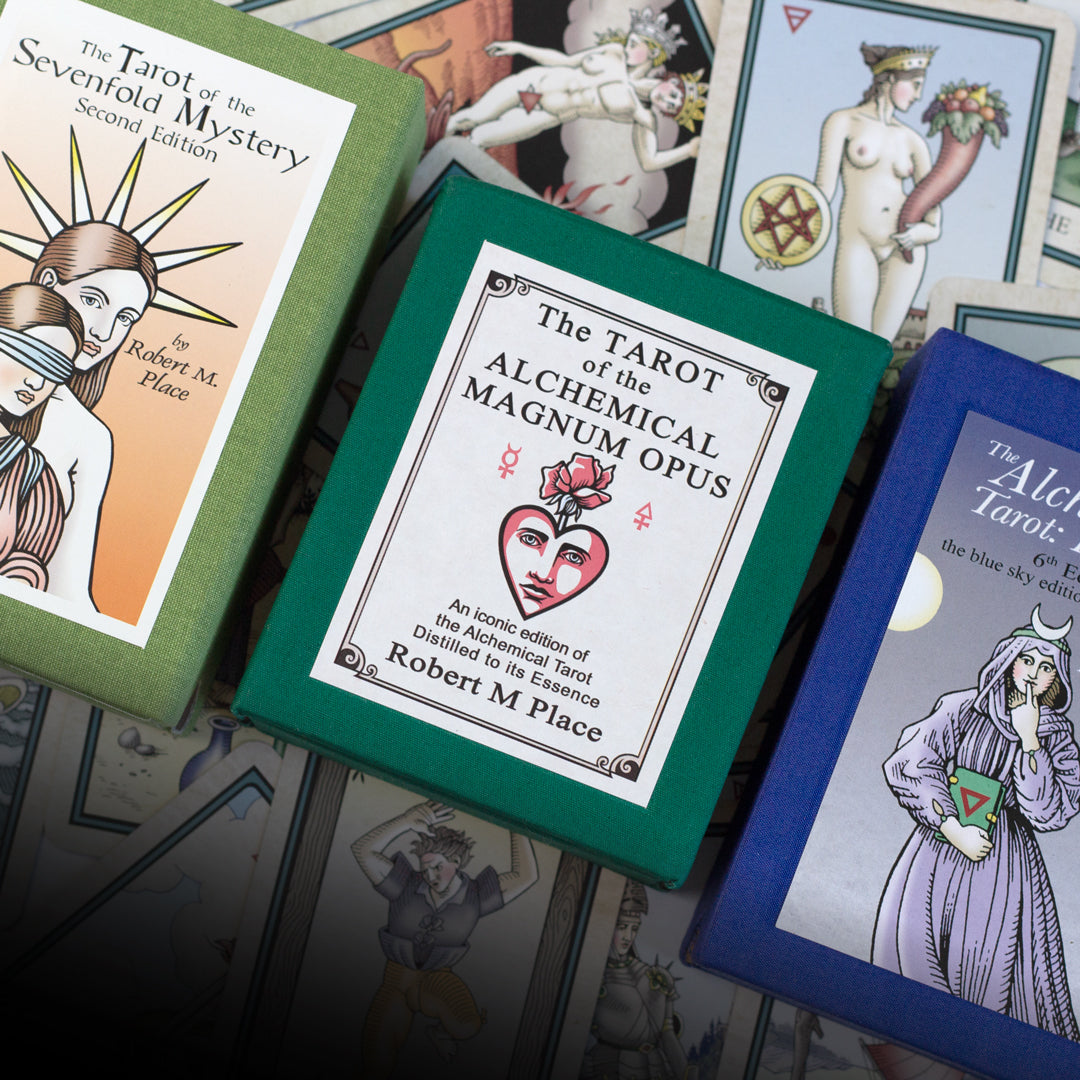
And on that note, the next thing you're gonna need to start your tarot journey is some sort of a tarot guide, something to give you what all of the images mean. And here's where my instruction gets a little less clear because every tarot deck, or most tarot decks, I should say, come with a tarot guide that will give you the meanings of the cards. The thing is, not every practitioner agrees precisely with what every card means, and in fact, many tarot decks are designed in such a way as to lean towards interpretations that its creator has, as opposed to the tarot world at large.
Now, when it comes to modern tarot, there are some standardized guides that more people follow than don't. I think the most popular one is probably gonna be Eden Gray's A Complete Guide to the Tarot, which was produced in 1970. I keep a copy of that at my desk at all times, and I look things up still. I mean I've been reading tarot for years now, and I still look things up, and the way I think of it though, is that it's a dictionary, it is not a Bible. And after telling you all of that, I feel like I can just render it down to the most simple nugget of information you're gonna need about what tarot cards mean. The most important meaning is the one it puts in your head when you see it. For example, the card reminds you of a story or of a memory from your own past. Then that's what's relevant in that point in the reading.
So my basic tip there is try to get what you can before looking things up just to see where your brain is taking you with it. And if that's not coming clear or fast enough for you, there's no shame in looking things up. Again, I still do all the time. And if you don't have a copy of Eden Gray around or the deck you have just didn't come with any sort of a guide or anything like that, there's still plenty of resources online where you can look up tarot card meanings, and they're just as good. Still, for the sake of brevity, we'll just say that it's a good idea to have some sort of a guide on hand.
Setting up your space
You're also going to need some sort of a clean, dry surface to put your cards down onto. I mean, tarot cards are pretty expensive. I wouldn't put them on any greasy or wet surfaces, but do what you want, I'm not your dad.
And there are other things you can optionally include, things that set the tone for what it is you're trying to do. Candles and incense are very nice for this, as is some sort of new age music or something, preferably without lyrics. I find that when I'm trying to read and I'm listening to music that has lyrics in it, the lyrics become a distraction. Your mileage may vary there, but the point is try to keep the atmosphere just simple so that you can clear your head and think about the task at hand.
If I could share my own basic setup, what I have is whatever tarot deck I plan on reading. I have my copy of A Complete Guide to Tarot by Eden Gray. I've got a white quartz crystal that I use for cleansing the area. And I also have a little altar, typically with four objects on it, because I like to represent the four elements or the four suits in some way on my altar. Currently I represent that with four Golden Girls statues. Please don't judge me.
Starting with the Major Arcana
Now, one more word on setup. If this is your first time learning how to read tarot, one thing I can recommend is separating your deck into its Major and Minor Arcanas. I'll explain.
Your tarot deck is going to have 56 cards in it that are very similar to what you would see in, say, a poker deck. They are numbered, typically ace through ten, and then you've got your royals, and they have suits on them. You have your Swords, you have your Wands, or sometimes called Batons, you'll have your Cups, and you will have your Coins or Pentacles. These cards are what we call the Minor Arcana, and if you are just getting started, it is totally okay to just separate those cards from the deck and only use the other 22 cards. Those are your Major Arcana.
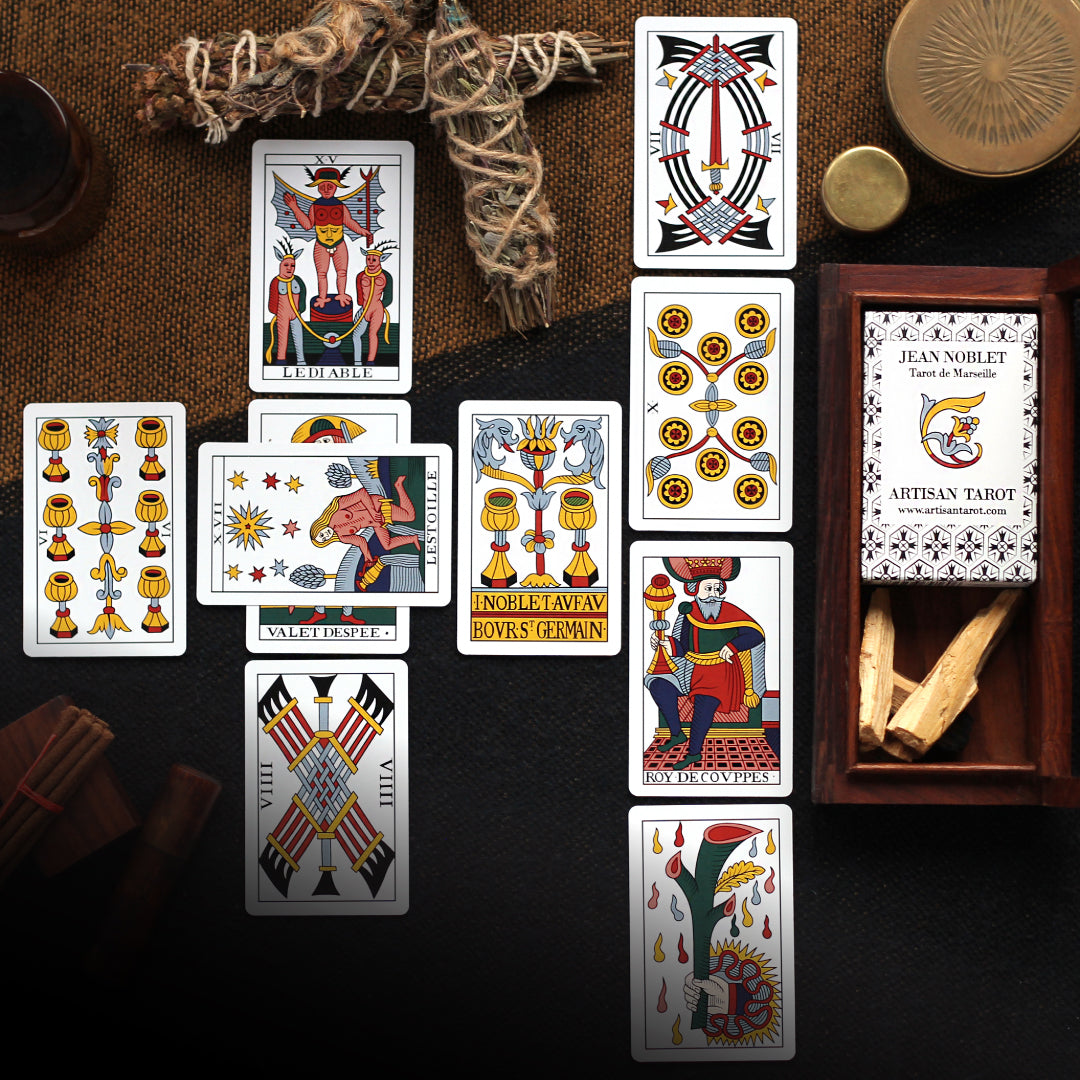
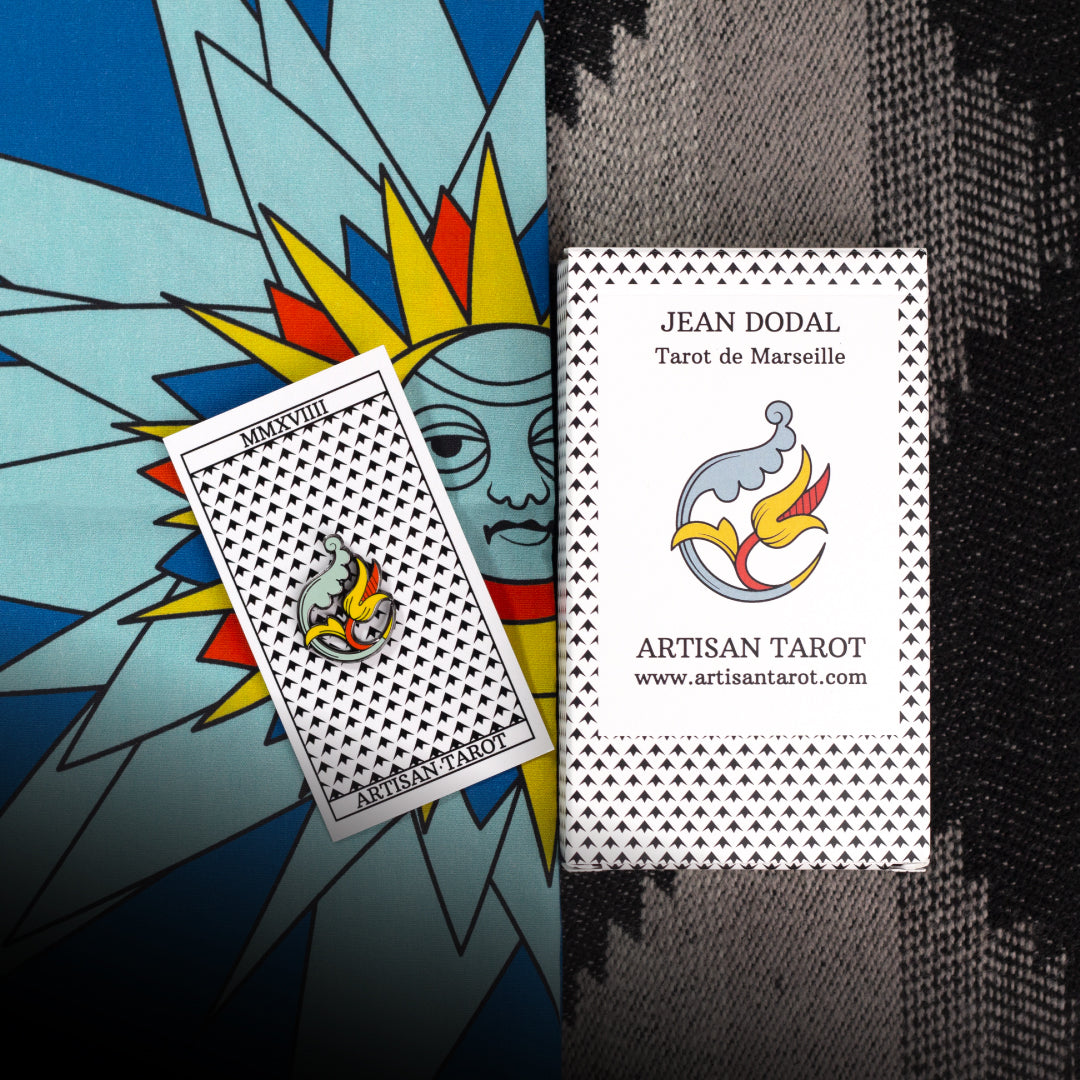
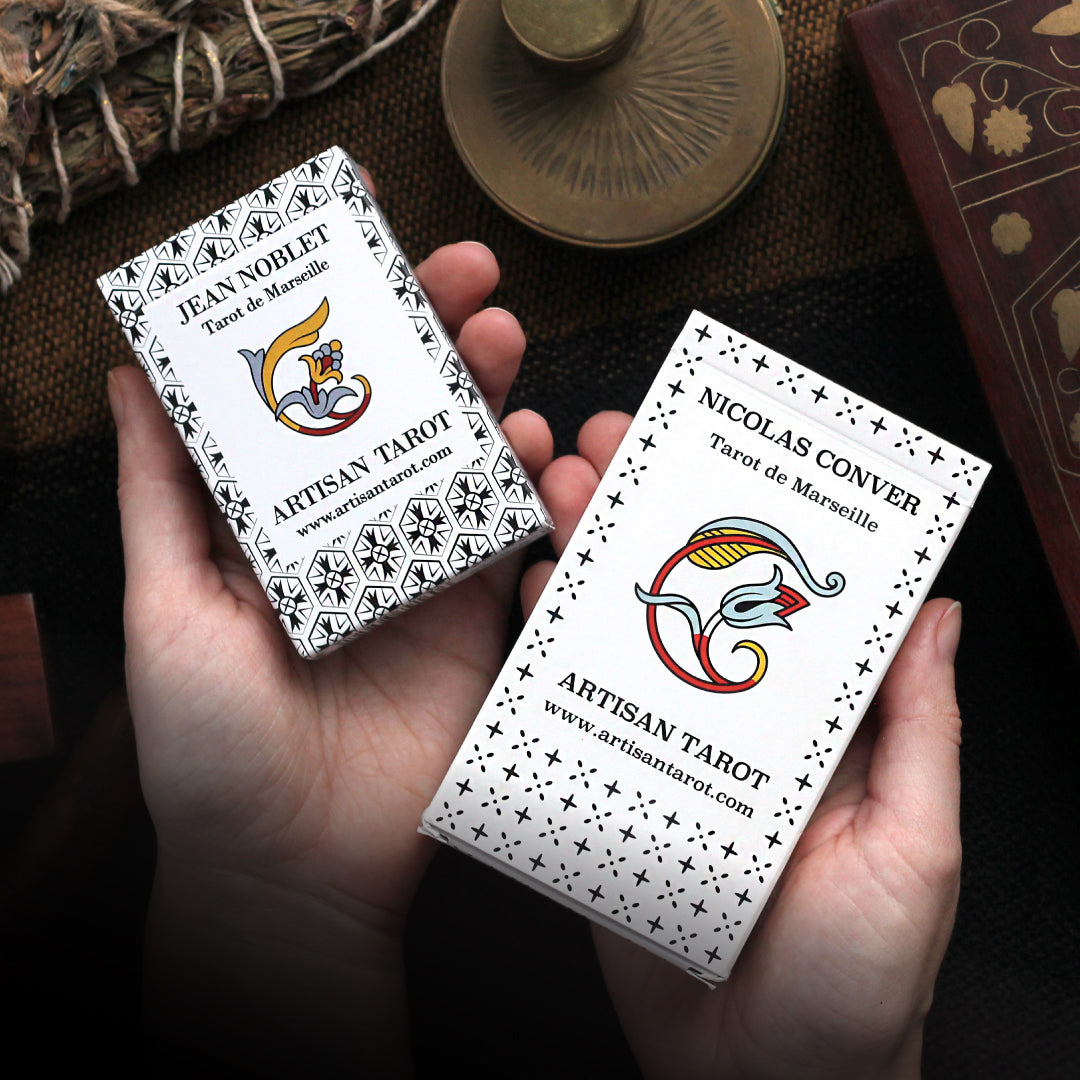
It is entirely possible to do great readings with just the Major Arcana. In fact, I've got a small wallet, I keep my bus pass in it, but I also keep a majors only deck that I got from Artisan Tarot, the Jean Noblet reproduction deck. And I'm able to do a lot of readings with just those cards. I mean, actually, it's funny we mentioned that. Just today, I used it while I was at the store to decide what birthday presents I should get for my friends for a party I'm going to this Saturday.
Generally speaking, it's a lot easier to come to terms with just those 22 cards than it is to try to figure out a full 78 on your first go. It's better to use the majors to kind of get your process down, if that makes sense. But again, always remember it's okay to look things up.
The three-card spread
So whether you're getting started with just a majors only deck or have decided to go the full 78, we're ready to get started. Let's walk through the process. Now, going back to what I said earlier about tarot is memes, one way you can think of tarot spreads is as meme formats.
You know, when you go to use a meme, there's a way that you're supposed to use it. You don't just stick a random phrase on the front of it. It just wouldn't make sense, right? So using the meme for its intended purpose is sort of the point of tarot spreads. Now, as you go forward in your tarot journey, you're gonna discover some spreads that you really like that will give you pointed information in specific sectors and areas.
But for now, what we're gonna learn is the most general form of a tarot spread, which is the simple three-card format. And all that entails is just shuffling your cards and laying down three cards from left to right. And these cards typically represent past, present, and future. That's sort of what the cards are assigned, but what you're really seeing here is just the linear flow of time.
There aren't a lot of rules in tarot that I consider to be so sacred they must never be broken, but in my own practice, the one rule I will never break is that time always goes in one direction, the same direction every time. And for me, it's from left to right because that's the direction I read in when, say, I'm reading a book or a news article. And really, that's the way stories work, right?
You can't understand a story unless you read it beginning, middle, end. You understand the story by understanding what comes before and after other things. I suppose unless you're Kurt Vonnegut. If you get that joke, let me know in the comments.
Clearing your mind before a reading
Now, as you're getting ready to read, which you do, you sit down, you clear your mind, you know, you just get yourself nice and calm, you have that tea that maybe you tried to brew, you smell that incense, you let yourself get into the mood for reading. Right?
And optionally you should have a question in mind. If you're reading for another person, they may ask you a question, they may not. Sometimes I read for people, and they just want a general vibe reading or something to that effect. Either way, if you don't have a specific question in mind, you're gonna want to clear your mind anyway. And if there is a specific question in mind, you want your mind clear so that you're just thinking about the question and not a bunch of other stuff.
Tarot works best when you are getting inspiration directly from the cards. That's really true of any divination art. You know, you're getting the information you need from the tool itself. You're being inspired by your tool.
How to shuffle
So now that your mind is clear, you meditate as you shuffle your cards. Now there's really no wrong way to shuffle. You gotta go with your feelings on this one. That said, you do want to make sure your cards are getting good and mixed up. So I can recommend watching some videos on card shuffling. You don't have to shuffle like they do in Vegas, you don't necessarily have to go super crazy.
I'll share my own process. I like to do what's called an overhand, which is where you pull the cards out and you sort of kind of throw them on top of one another until they form a stack that's not in the same order as they were before. And then I'll follow that up with what I call a toggling overhand, where I will throw the cards similar to an overhand, but I will toss them at the top and the bottom, alternating, so that they get further mixed up that way. I'll follow this with what's called a riffle or a corgi. And that is where you take the cards and, you know, that thing where you know what I'm talking about, the thing you see in all the Vegas movies and whatnot. And then there's a fourth kind of shuffle. I usually save this one for when it's a new deck and I haven't used it much yet. But it's called a wash. And if you have a big enough table, all you do is you take your cards, you spread them out, you rub them around for about 15-20 seconds into one big pile, and then you pull it back together. That's called squaring the deck, right?
If this is your first time using a deck, I recommend going through this process about seven times. But if it's a well-seasoned deck, you've been using it for a while, three to four times is fine. But while you're doing this shuffle, that's the time for you to be thinking about the question you might have been asked, or maybe some concerns that have been brought to your attention, or if you're reading for yourself, some concerns that you have, making sure you're staying focused. Don't let your mind drift into other areas while you're shuffling.
Cutting the deck
Then, when you're done shuffling, a good thing to do if you're reading for another person is to have them cut the deck for you. This forms a sort of energy connection with them. It performs the task of getting them invested in the reading. They've touched it in some way. I feel it's very important when you're reading for other people to never skip this step. They should be invested in one way or another. Otherwise it's just you, right? But if you're just reading for yourself, it's also a good idea for you to cut the deck at this point.
A sample reading: The Fool, The Sun, and The Devil
And then after you do the cut, you go ahead and you deal out three cards left to right. As an example, I've gone ahead and pulled myself three cards. I have gotten The Fool, The Sun, and The Devil. My next step at this point is to gather the interpretations and meanings for these cards.
The Fool is a card about new beginnings. It often talks about starting something new that you maybe don't have a whole lot of experience with beforehand. But either way, it's a card about starting something. That moves into The Sun card, which is a card about great success. It's probably the closest thing a tarot deck has to a you win card when it comes to interpretation. So it talks of good things, the sun rising, all that fun stuff. From there, we go into The Devil, which this is a complicated card, and it's interesting that it's come up in this little tutorial, and this is where you're gonna want to look things up for yourself and maybe also meditate a little bit on what you think these cards mean. But for me, in my practice, The Devil card represents desire, and the reason why is because The Devil can't tempt you with things you don't already want. In fact, the depiction of The Devil more speaks of desire in the context that if you let your desires control you, then you know you become their slave and they are your master, right? But the thing is, depending on what guides you read, you'll get other reads on what The Devil might mean, and that could be important to you too.
So, the point is when I read this three-card spread that's in front of me, I see that I am starting something new, which is not really a surprise. This is really my first time doing a solo podcast, and I see in the present is The Sun card, which is great because I am actually having a good time doing this. But The Devil in my third card does serve as a warning that I might like this a little too much, which I suppose isn't a problem. And if you like these podcasts a lot, then I guess I'm gonna be stuck doing them for a while. So that would certainly explain why I would be chained to a pedestal on that one as well. Perhaps Will will have me doing these forever. But hey, not complaining. I got here through a Sun card, so I'm obviously having a good time.
Scaling up from three cards
And that essentially is the process. It's really that simple. Shuffle the cards while meditating on your question, lay them out, and go from left to right interpreting the symbols so that they form a narrative. And then you take that narrative and you relate that to whatever it is you're thinking about or doing in the moment. From here, it's really just a matter of complexity and scale.
You know, I've just used a majors only deck, but I could get more possible symbols by using the full 78 cards. I've only used three cards at this point, but I could get a much more complex narrative by using a more complicated spread. And a lot of those spreads are gonna have positions that are predefined, thus controlling the narrative even more precisely. And then as you expand from the tarot system into other systems, you're gonna find that the same is true. You're just taking the basic elements, getting their interpretations, forming the narrative, and then relating the narrative to the question at hand. And that is the art of divination. Very simple.
What people use divination for
So we discussed briefly the beginning, what divination is and what it isn't. But we really didn't get around to what divination is used for. Now I've had the great pleasure of talking to lots and lots of people over these years and getting to know them and more importantly, how they use tarot in their lives.
There's the ones you're expecting, you know, people who are practitioners of some religion or another who use the tarot in their practice to communicate with their intercessors, which is the word I use for whatever spirit or deity or whatever you want to call it that you know they serve or communicate with to get what they want out of their practice.
I also know a lot of my artist friends who use tarot as a means to inspiration. Because tarot is at its heart, storytelling, it's a great way to get story prompts. So if you're a person that likes to write or do poetry, things of that nature, and you're looking for just an easy way to get some prompts for what it is you're working for, tarot is a great source for that.
Occasionally, I even talk to people in the psychology and therapy fields who explain that their use of tarot in their medical practice is close to the way we traditionally used to use, say, Rorschach tests or things of that nature. Basically, something you can give to people so you can get their interpretation from it and better understand what's going on in their head, the unique viewpoint that they have on a certain topic.
And as I mentioned earlier, I like to use it in my own life for when I have a situation where I could go in one of several different directions or whatever, but I want a random decider that's a little more complicated than flipping a coin or picking petals off of a flower or whatever. Like imagine if flipping a coin could also sort of give you a why you should make this decision sort of thing, right? Or it just prompts your brain so that you know you have to fill in the blanks yourself with your own logic and reasoning.
And maybe you heard that story and you thought, wait a minute, you sat there and did a whole three-card spread in the middle of a store. Actually, no, I didn't. I did a little bit of a shuffle and then I did a cut and I pulled one card, and it gave me all the information I needed to select a great present for my friend. Because again, the three-card spread is just really the introduction, the most basic way of understanding what tarot is and how it works, and to get you familiar with the cards so that you can work them into your daily life a little more often, and even come to a point where you start to memorize those meanings.
Making the meanings your own
Because with practice and with exposure, the meanings start to become natural, and you'll even season those meanings with your own personal understandings. As a personal example, again, I've come to have a really close connection with The Fool card, because a lot of the principles that The Fool card talks about in many of its interpretations also apply to my own life and key things that have happened to me in the past.
So a lot of times when a Fool card comes up in a reading for me, it deepens my understanding of what it is the cards are trying to tell me. It prompts things in my brain, gets me thinking in that direction. And I find that to be a very constructive way to organize my thoughts. And as you proceed on your tarot journey, you're going to find your own use cases, places where it has been useful for you, decisions that it has helped you make, creative prompts that it has given you. These are all things that are going to be unique to you because no two people's tarot journey is ever really the same.
You know, I've just given you a bit of a common starting point where most divination artists start their tarot journeys with the three-card spread and with understanding the narrative role that the spread plays and how to read that in order and turn it into a story and then turn it into a thought. Like that's a basic starting point. But from there, there's a whole universe for you to travel into with your tarot cards. And then as you get the hang of it, you're gonna branch out into other things. You're gonna maybe discover runestones or dice or reading tea leaves, coffee grounds, things of that nature. There's all kinds of things you can do once your brain starts to get wired for doing the divination arts.
Closing and where to find us
This has been the Art of Divination Podcast, presented by Artisan Tarot. You can find more from them, including all the great decks and accessories that they make, over at www.artisantarot.com. As for myself, I've been Z Mann Zilla. You can find more about me at www.Pandangit.com, and I wish you all the best of luck on your own personal tarot journeys. Happy reading, and thank you for your time.


