
A performance art
As I'm very fond of saying, tarot and other divination arts are a performance art. And that is not to disparage it. Most of the media we consume has a way of sticking with us for a very long time. A well-crafted piece of media has a way of sticking in our minds and giving us something to think about.
But it's important to note that when people create these pieces of media, this is something that they're thinking about consciously. And so that's what we're going to be talking about today. We're going to discuss some performative techniques that you can add to your reading style and go into why you should add them in the first place. So sit back, relax, and join us as we explore the art of divination.
A little double entendre
Welcome to The Art of Divination presented by Artisan Tarot. I am your host, Z. Mann Zilla.
On this episode, we'll be discussing how to perform a reading. Now, don't let the little double-entendre name fool you there. This is not going to be an episode giving you how to actually do a reading. We covered the basics in our first episode of how to do a basic tarot reading. And there's certainly many places where you can get a tutorial if that's the information you're looking for. What we'll be focusing on today is the bits and bobs of how to actually make your tarot readings into a performance. And you might be wondering why would we want to do that? Maybe you only read for yourself, in which case a lot of this is not really going to apply to that. If what you're using the divination arts for is self-reflection or just giving yourself little fortunes to follow, this is not as important. This is very specifically skills that you should work on when you are reading for others.
Theater and professional wrestling
Now keep in mind as I present these to you, my main goal in all of this is to show you how to help your readings really stick in the minds of the folks that you're reading for. And when I think of these sort of reading techniques sticking in a person's head, my mind typically goes to the way theater works. Or if I'm being completely honest, the way professional wrestling works, but I'm at risk of turning this into a professional wrestling podcast if I keep bringing that connection up anymore.
But none of that is inconsiderable because what we're talking about at the end of the day is a performance art. You are in essence telling a story, and you would like the audience of that story to keep that story in the back of their head and think about it from time to time when it's relevant to do so.
So let's go into the performance of a divination reading, and to start, we have to set the stage. So let's do that by talking about how to set up your stage.
Setting the stage
In previous episodes, you've heard me talk about what I like to call Kavanah or sometimes kayfabe; the second word is the one I tend to think about more often, again, because I tend to equate everything to professional wrestling. But what this refers to is the ways that you set the mood of your environment and get yourself in the proper mindset to do a reading. The thing is that when you are reading for other people, you want them to share that mindset. That way you're both sort of operating on the same even level. When you go to watch a play, you see that they've set up the stage to look like whatever room or environment that they plan to be in when they're talking to you, or, more to the point, talking to the other players within the scene.
A Shakespeare scene that takes place in the woods makes a lot more sense when it has the context of just a couple of trees sitting out there on the stage near the actors. That way your mind automatically assumes, okay, we're not in a throne room, we're out in the middle of the woods, and so that's where this conversation is happening. Similarly, when you set the stage for the folks that you're reading for, it places them in that same mental space as you. And there's lots of ways of doing that.
Set pieces, incense, and music
I think the most basic one that we all think of just right off the bat would be that we set up our altar, we have our crystals and our incense and everything going. This sets the mood a whole lot better than, say, having a cup of coffee and a tape measure on your table, right?
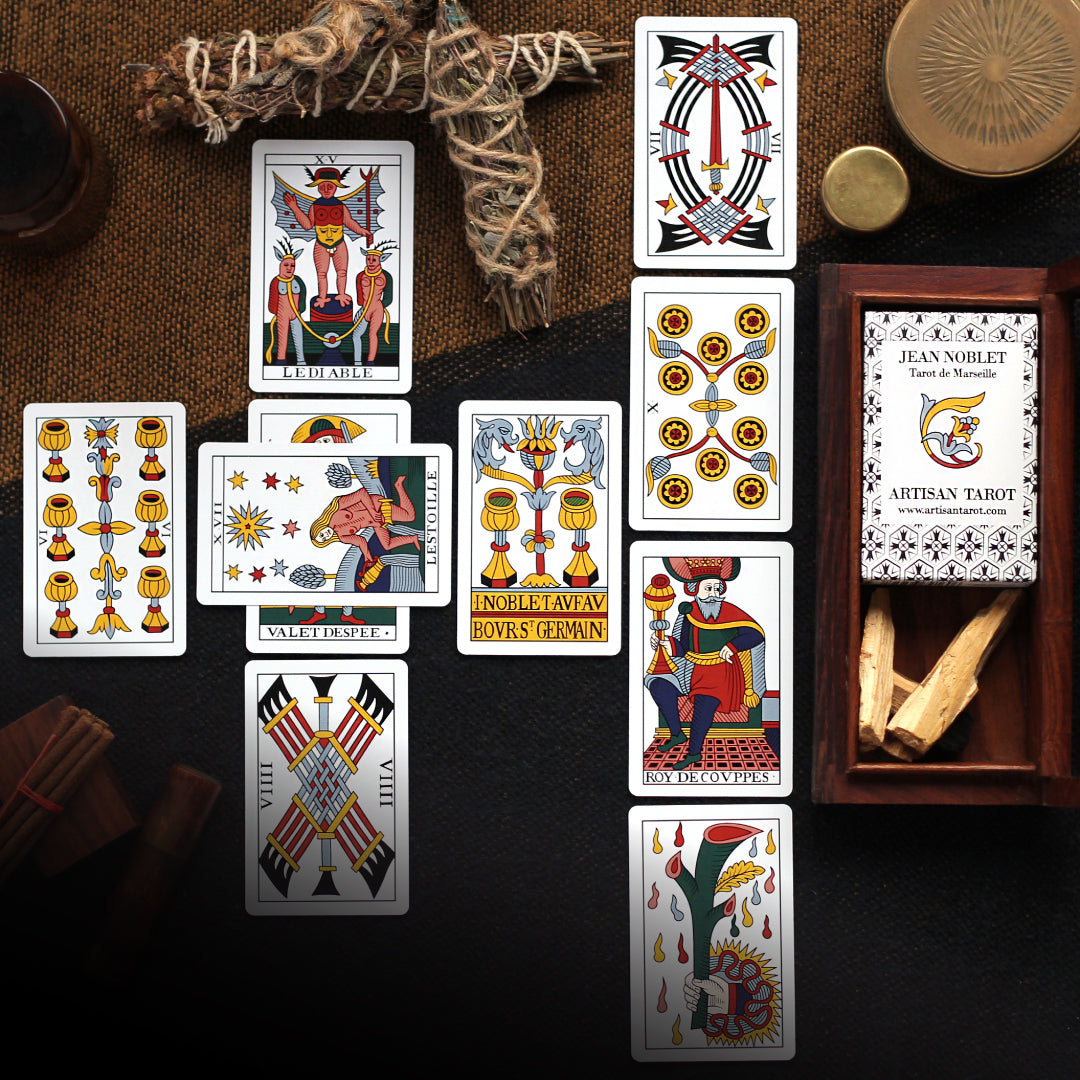
But that is an important note to bring up. The things that are on your table are assumed to be part of the performance, as it were. If you have just random bric-a-brac on your table, those serve as distractions that take the mind out of what it is that you're trying to do. A lot of readers like to lay down some sort of an altar cloth or something that's got, it's going to have the astrological signs all over it. There's going to be some imagery like sun and moon and stars and things of that nature, and that helps to set the stage, certainly. Having a selection of crystals or effigies present certainly helps establish that as well. Think of those as your set pieces.
And you also have access to some nice environmental factors, for example, lighting some incense or playing some music, preferably with no lyrics in it. I find that when you are using music with lyrics in it while you're trying to read, the lyrics have the opportunity to distract the querent. The goal you're going for here is to try to get the querent focused on you. If you are introducing some sort of an arrhythmic audio thing that's going on in the background, like music that has a lot of change-ups, like your System of a Down kind of music, or has very complicated lyrics or something like that in it, those present opportunities for your querent to be distracted from you. In this performance, you, the reader, need to be taking center stage, and you don't want to be fighting for attention with your background elements.
Reading at a party or a bar
Now, I do recognize that you're not always going to have that level of control over your environment. Say, for example, you're reading at a party or you're doing a reading for somebody at a bar. I recognize that those do present some challenges for trying to make sure that you're keeping the attention focused. After all, you've got a lot of other things in the environment stealing that attention, and that's sort of what the venue is there for. Again, if you're at a party or at a bar or something like that, the idea is that they've set up their environment for what they want to do, and now you're competing with that.
So the trick in those situations is to invite querent investment. And we're gonna go into some what I like to call participation mechanics later, but at the very beginning, when you're first setting up, and you're setting up in sort of a distracting environment, or even in an environment you have control over, it is still a good idea to try to get that investment from the querent as soon as you possibly can.
Now you'll remember in previous episodes we talked about advice columns and horoscopes, and one of the things that those had in common is that any medium that invites its audience to participate creates that investment. The querent might be in a party with lots of other interesting stuff going on, but nothing's more interesting than the one part of the party that's taking a personal interest in what they have to say.
So another way of setting the stage is just to have a conversation with the querent. Ask them what's going on in their life, ask them what is troubling them, or what's been on their mind. Give them the opportunity and the space to talk about that and listen as they talk. But it is very important as well to maintain that attention that you are getting from the querent. And that investment starts to go cold the very second you start allowing for any downtime.
Shuffle banter
So, how do we address that? Well, you've heard me talk a lot about this in the past, and I'm gonna go into more detail right now. Let's talk about shuffle banter. Now, I've brought up shuffle banter a lot in previous episodes, and it's something you will frequently see me referring to during a lot of the lectures I do for Artisan Tarot.
And when I refer to it, what I'm specifically talking about is the discussion that you're having with the querent while you are shuffling your cards and setting up your spread. See, regardless of which divination tool you prefer to use, there's always gonna be some setup involved. You're gonna need time to do whatever it is that randomizes your particular tool. Depending on the complexity of your layout, there's probably gonna be some time there for setup and arranging things just the way they need to be arranged. And the thing is that if you do not fill that space with some sort of talking or having the querent fill that space with their talking, then that represents some downtime where the querent's mind can drift into other topics.
Or again, depending on where they are, this can be them getting distracted by their surroundings. So to avoid that, I've developed a lot of techniques under this banner that I call shuffle banter, which is the conversation I'm having while I'm shuffling cards. At its most basic, I'm asking those questions and receiving those answers that we talked about in the previous chapter. I'm also answering the querent's questions during that time. If they happen to have any, that is a good time for me to address whatever concerns they might have.
Reaching into your back pocket
But let's say the well runs dry on those options. They've already said everything that they're gonna say, you've already said everything you're gonna say, and so what are we talking about the rest of the way? This is where I like to reach into my back pocket. When I say back pocket, that's a term that's used by folks in the improvisation circles to refer to just little jokes or anecdotes or things of that nature that they've always got stored in the back of their head that they can talk about if there's nothing else to talk about. Having a good stock of these back pocket conversations can be very useful for your shuffle banter.
Now, I am a tarot nerd, and so there's no small number of little anecdotes about tarot's history or mechanics of tarot I find interesting, things of that nature that I can pull out of my back pocket that are relevant to what it is we're talking about. And in my head, I like to think of them as those little pro tips or tooltips that like to come up during loading screens on video games. You know, did you know that you know such and such is part of tarot history? You know, that sort of thing.
But a lot of my back pocket anecdotes can also be applied to the situation that this person is in. I mean, you do a lot of readings for people that are having relationship problems. Well, I think we've all got a pretty extensive backstock of things that have happened in our own relationships, right? You might want to curate those a touch, depending on how saucy they get, but those are good go-tos. And I think the same principle applies to things like job searches or any sort of career advice.
Small talk and cold reading
And of course, this is a good time to discuss the process with whoever you're reading with. For newcomers, this is a way to help ease them in and familiarize them with what the divination arts in general are about and how your process works specifically. And that latter point is going to be important even to folks who have experience with the divination arts, because every reader does things just a little bit differently, and it's a great way to front-load some of the way you do things differently.
And if all else fails, you can also just do small talk. How was your day? What have you been up to lately? How did you get here? That sort of thing. And while you're doing this shuffle banter, that is when you are shuffling your cards, setting up your spread, and all that. Now, the nice thing too is that depending on which method you're using, I'm gonna stick to tarot cards here because shuffle banter equals shuffle, but you do have some control over how long this process takes. And so it's not gonna hurt your cards anymore to shuffle more than you would normally shuffle, so you can extend that period of time even more if the querent is going into something that's deeply important to them.
And I would encourage you, if that is what the querent is doing, to go ahead and play along and keep shuffling. See, the value of the shuffle banter is that it presents that opportunity to glean more information off of the querent. In mentalist circles, they call this cold reading, the idea of gleaning bits and bobs of information from your querents so that you can use them to inform your divination.
Jumpers
Now, I do want to segue quickly into two concerns that come up for me during the shuffle banter process. The first is what if I am one of those readers that looks for jumpers when I am shuffling my deck? Now, for those that don't know, a jumper is when you're shuffling your deck and one of your cards just comes flying out for whatever reason. There are certain shuffle types that are popular on social media because they create jumpers. And the idea behind the jumper is, oh, this is a piece of information so important to the reading that the deck just spit this one out and said, "Put this one first." And it's also a great way to explain why that happens if, you know, like me, you're a little bit clumsy with the cards.
But if you are engaged in shuffle banter, that does present an opportunity for distraction or interruption, which is why the way I usually deal with it is just to go oop, jumper, and just push it to the side and continue just right on along. We can always circle back to it when I have space to talk and explain that mechanic.
Face up or one at a time?
The second, and this one's a little more of a distraction from the topic, but I did want to bring it up here because I do think it's fascinating to what we're talking about here, which is the psychology of holding your querent's attention. And that's the question of whether to turn cards all face up before you start the reading or to turn them one at a time as you go along.
Now it's easy enough to say do whatever feels right. That is, in fact, a good blanket piece of general advice for any divination art. And of course, some people find the narrative crafting part a little bit harder if they're not sure which cards are coming. But here's the thing I think about with my decision, and then my decision is usually for longer spreads, such as the Celtic Cross. I'll turn cards as I go along rather than turning them all at once, and the reason why is because I am aware of querent anxiety and querent anticipation.
So let's say that you're doing a Celtic Cross spread, and one of the cards that often gets interpreted negatively by newcomers, say the Death card or The Tower card, is appearing in the ninth or tenth slot. Well, now you have this distraction coming up that you have to fight through when you're trying to discuss cards one through eight. And for the same reason, I don't like to play music with lyrics in it in the background. I don't necessarily want this Tower coming up in the future to make it so that the querent is not listening to what I have to say about the cards that come before it.
So to reduce that anxiety, what I like to do with longer spreads is keep the cards face down and flip them as I go along. And I've practiced over the years making sure that I can still craft a narrative on the fly with every new card that gets revealed.
Card backs and reversals
This incidentally is why I also like it when the backs of the cards look the same right side up and upside down, because if your cards are all face down but one of them is very clearly in a reversed position, then again, that's going to provide that distraction. And it's even worse in this case because it doesn't even have to be The Tower. All the querent knows is upside down card equals bad.
So again, they're not listening to you as you do the first half of the reading because they're worried about the reversed cards in the latter half. So I consider that an avoidable distraction, and the way to avoid it is just to use cards that look the same upright and reversed when they're face down.
But regardless of which method that you're using, what you're acknowledging there is that the querent has a mind of their own and their attention is going to wander where it is most organically gonna wander or where you choose to lead it. Shuffle banter provides you one opportunity to lead that attention and keep it focused on the reading so that the reading can have the full meaning that is intended.
But of course, it's not the only way. I spent a lot of time focusing on it because I consider it one of the most important, but it's not the only way. Generally speaking, though, there's lots of mechanics there that can lead that attention and keep it in the reading. And the best way to do this organically is with audience participation.
Participation mechanics
So now we're gonna switch over to some other ways that you can make sure that the querent's attention is staying on you and the reading. Now, of course, the easiest one we've practically beaten into the ground, just have the querent talk about themselves. You know, when you start the reading, they're gonna start by telling you what their concerns are, or maybe during the shuffle banter you did a little small talk with them and they talked about how their day's going, how they got there, that sort of thing.
But I also talked about how this type of audience participation can grow cold. The reason why is because once they stop talking about themselves, they're not doing the thing that's keeping them engaged anymore. It's now up to you to help them stay engaged. So these participation mechanics are meant to be more slow burn, the idea of giving the querent something that they can latch on to that's gonna stay relevant throughout the rest of the reading.
Letting them choose the deck
The first way to do this, and this is where deck collecting is really gonna help you out, but have the querent select a deck from a group of decks. Now, I actually have to caution you about something with this one. You have to be aware of decision anxiety. Okay, so you know, if you give somebody like a dozen decks to choose from, then there's a lot of anxiety there because for every one thing they selected, there's 11 that they didn't and have to worry that maybe one of those other 11 was the right one.
So that's why I like to keep the selection pool nice and small. I typically go no more than three, maybe four in a bind. Often what I'll do is I'll have the querent talk to me about the problem, and then I'll go through my collection and pick what I feel are three or four decks that best fit the bill for that.
Now, it is worth mentioning I don't always have to do this. In fact, I've had just as many folks that have come in and seen my shelves full of cards and gone, I really want to do that one. And you know what? The selection has been made with no anxiety. That's fine by me. But, well, first of all, I'm not gonna take my entire shelf of cards with me every time I go out to a party. And second, I'm often reading for a lot of people that have had very few or even no readings before having a reading from me.
So by reducing the number of selections and narrowing that choice down, I make that decision just a little easier for the querent.
Cutting the deck
Another participation tactic that I like to use is to place a lot of importance on cutting the deck. And there's a number of reasons for this. The first being that I've talked to you in the past about my matching energies theory, I like to have the querent have some sort of a personal investment in the outcome of the spread, but mechanically and practically, this is also an anti-skeptic tactic.
Now, it's not foolproof, but you don't have to go out of your way to please skeptics. There just has to be something there as a demonstration that, yes, I have not tampered with this spread. I am not rearranging these cards in any way to get an outcome that favors my ability to read or anything like that. If for no other reason, then it is a demonstration of your skill to be able to do it that way. And going back to this is a performance art, your performance is more impressive if you are giving yourself these situations to operate under. And my personal favorite is when I get querents that like to get really crazy with the cut. They'll cut it into fours and reassemble in some weird order, maybe flip one of the cuts just to be a little spicy.
Cutting the deck online
Another one that happens is when I'm reading online; obviously they're not there to cut the deck themselves. So what I'll do is I'll cut the deck into thirds and have them pick which one I'm gonna read from. And sometimes people will get crazy with that. They'll say, the first card will be the top of number three, the second will be the cut top of number one, the third will be the top of number two, something like that. If they want to go crazy with the cutting, I'm just gonna yes and that. It's all part of the performance.
Because at the end of the day, it doesn't matter to me what cards they are choosing to be in what order. The point is that I'm not controlling that outcome, and the more control they exercise over that outcome on their own, well, the more personal responsibility they have to take for the cards that come up, which ultimately means a stronger audience investment, which is what you're looking for ultimately.
Leaving gaps for the querent
Now, audience investment doesn't just stop at the cutting and the selecting of cards during the reading itself. There's just little ways you can use to keep the querent invested in what it is you're talking about. Now, I mentioned especially in longer spreads, I won't turn a card until I'm about to read it or its turn comes up. And so often I need to stall for time a little bit when I'm thinking about what that card adds to the narrative. My method is typically to talk it out, to say, oh, this is the symbolism I'm seeing here, and this is typically what it represents. I wonder what this means, that sort of thing.
And I leave little gaps in my speech there, A, because I am actively thinking about what this means, but B because this also serves as an invitation for a properly invested querent to tell me what they think they see. And in those cases, I love to grab onto whatever it is they saw and say, yeah, let's go with that. That must be what this means. We talked in the advice giving episode about how it's better to lead the querents so that they feel like they've come up with the advice themselves.
This is a great way of helping to establish that. And on a more practical note, it takes some of the workload off of your shoulders. So these are just a few participation mechanics that will help your readings stick in the mind of your querent more.
After the reading
Now let's talk just a little bit about how to keep that reading stuck as they go forward in their lives and use the advice that you've just given them. And that implies that you would like that advice to stick with them. Now, if they've been properly engaged through a well-performed reading, then that experience is already going to stick with them, and it's something that's going to come up for them later in their life.
But that's not necessarily a guarantee. And besides, you want to create repeat business, right? So here's some other things you can do after the reading to help that advice be just that much more sticky.
Summarize the action items
First, make sure you're closing by reiterating any calls to action that you've suggested. The reading itself was likely filled with a lot of metaphor and a lot of fanciful language and also a lot of deep dives into specifics. But your querent is not a tape recorder. They didn't memorize every single moment of that reading. They're probably just taking little bits and bobs that they found most interesting.
So a post-reading summary of the action-oriented items of that reading is recommended. One of the things I've noticed with a lot of reading techniques that do the sort of I see you needing to harness this energy and do this with that energy and whatnot, is that you'll have querents come away from the reading with this idea of I just have to embrace my X energy, right?
But the thing is that those energy discussions are often great metaphors for what it is you're actually trying to talk about, which usually is more of a grounded practical activity. So you don't want the takeaway to be, sit there and wait for your pot of gold to arrive. It should be here's the things you need to do to get that pot of gold that you want. So again, a post-reading summary of the action items is highly recommended.
A photo of the spread
Another good idea, and I probably don't have to give this advice because a lot of people will do this naturally, but just in case, have the querent take a photo of their spread. We're in an era where everybody's carrying smartphones, so they usually have at least two cameras on them. So, have them use one of them to have a little souvenir of the reading.
This also invites them to go ahead and get a second opinion from other readers, which means that they're discussing the reading more, which means they're thinking about it more. All part of that querent retention.
Crafting a sigil
Next, and this was an idea I first got from William Rader over at Artisan Tarot, but it really sticks in my head because of the way Luciana Peña, who's the artist behind the Sion Tarot and the Sion Sigils, really made it clear to me how important this can be, and that's crafting a sigil for your querent. And a brief segue there, a sigil is just sort of an abstract symbol that represents a principle. Luciana includes a deck of them, the Sion Sigils, along with the Sion Tarot, which is itself a very great deck and very witchcraft minded, and I have a copy of it, I adore it.
But the thing I like most about sigils is they are very inexpensive and easy to make. You basically just do a little drawing, maybe with a Sharpie or something of that nature, and each of the bits of the symbol you create represent principles of what it is you talked about or aspects of things that the querent would like to focus on as they go forward, and then bam, there's this significant little symbol that holds all of this value for them and further makes it so that the principles stick in their head.
And I know in my own life that I've got a sigil that I draw that helps me move into action whenever I need to. I can't describe it to you. This is an audio medium, but anyway, when I draw that symbol on things, it's a reminder to me of some of the principles that I need to follow in order to keep my projects and whatnot moving forward.
So it's one of those things that I can personally attest to the success of. They're very great and very easy to produce and a wonderful way to get people to remember your practice, which plays very nicely with the last piece of advice I'm going to give you.
Book a follow-up
Be sure to invite them to book you for a follow-up. Now, if you're reading for money, then I don't have to explain why this is important. You want repeat business. But even if this is something you're doing for fun, what you're doing there is that you're letting them know you want to follow up because you want to see how it went. You are taking an interest in the life that you have touched. And I've said many times how empathy is the key to everything that we do. Being able to empathize with the folks you read for is very important.
But empathy isn't just for the time between when the reading starts and when the reading ends. The key to empathy is to care, and that's to care beyond those meager boundaries. You may have completed your performance and sent them to exit stage left, as it were, but all the world's a stage, which means the performance never truly ends.
So take that opportunity to invite them to another reading. Show them that you care about the results, because that's how you get an encore performance.
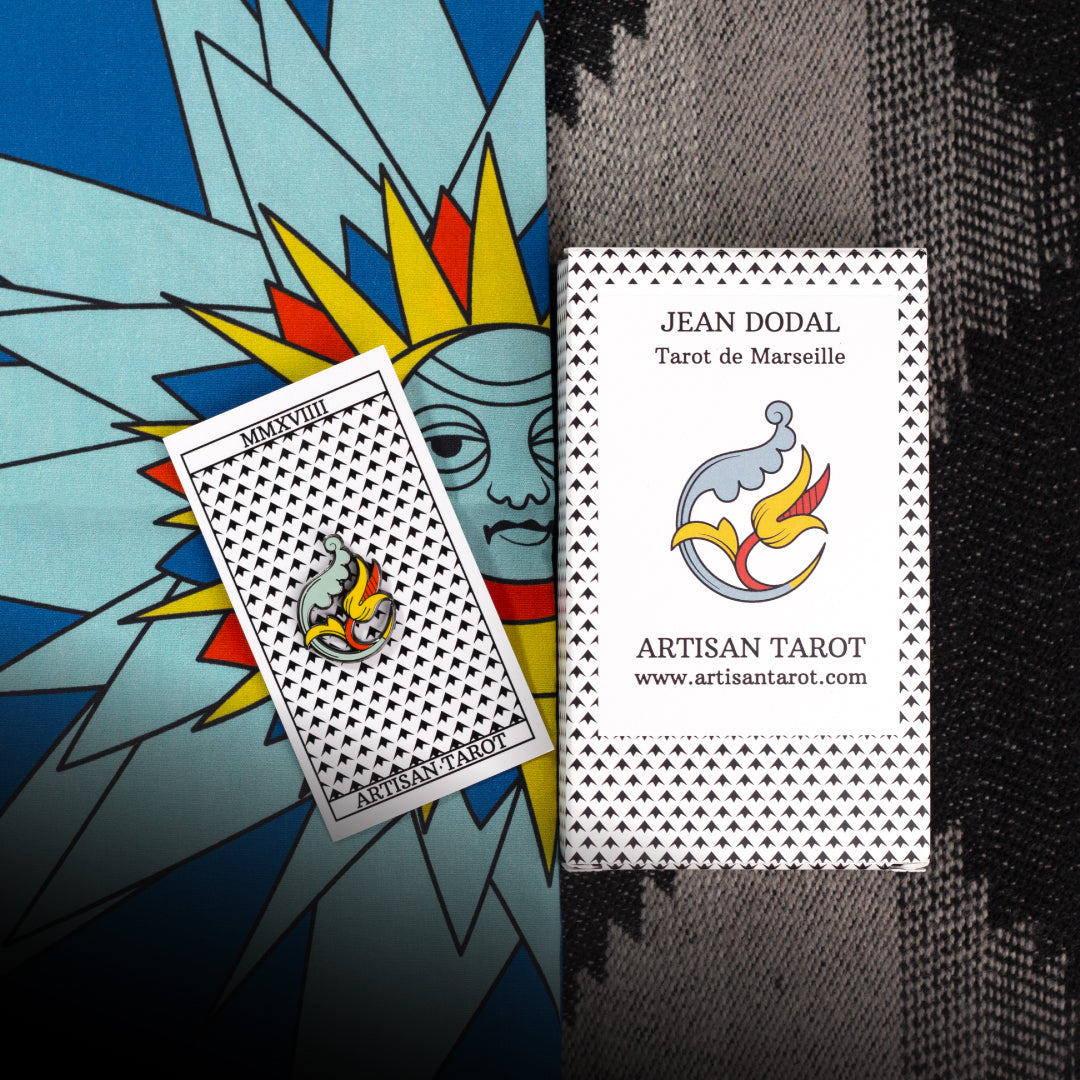
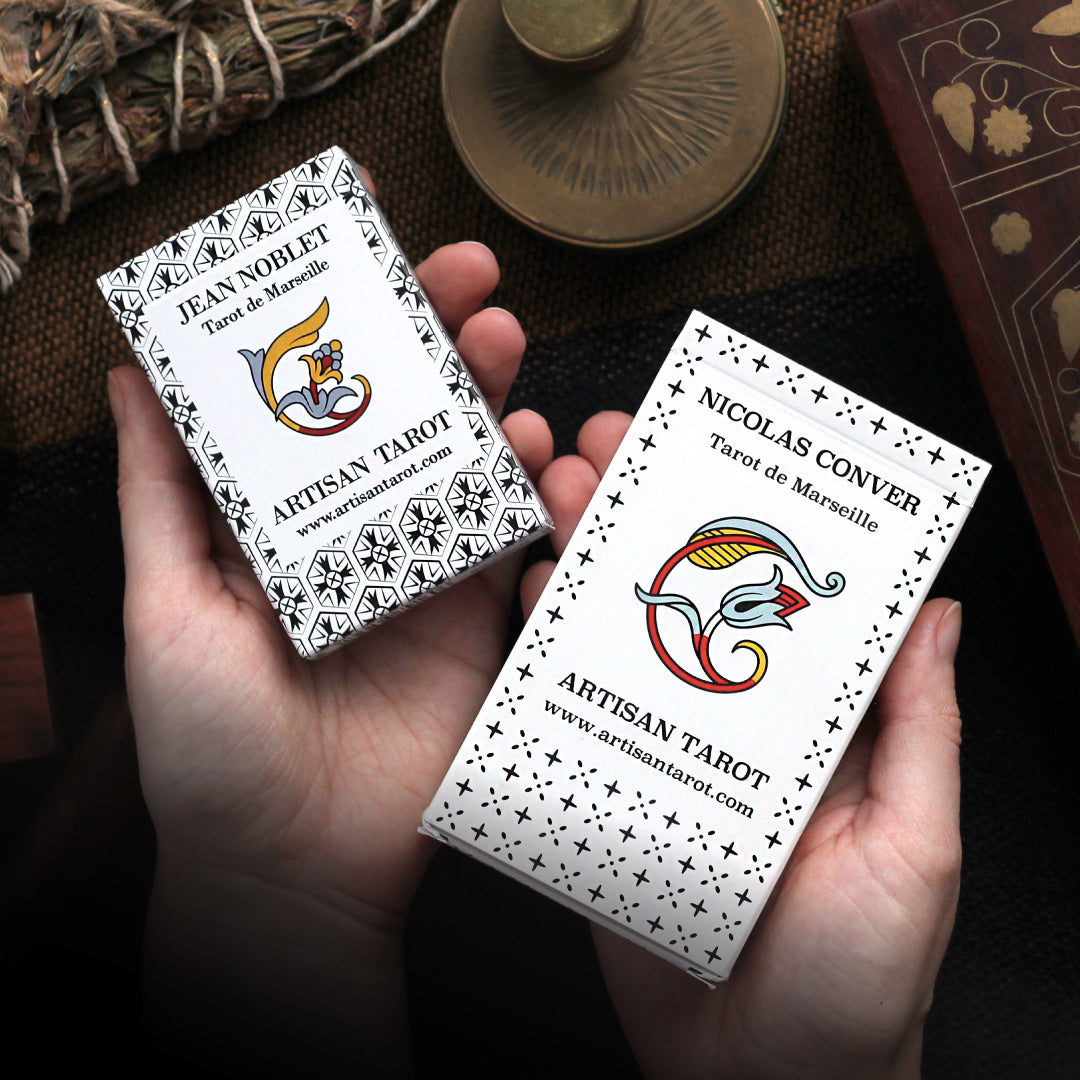
This has been The Art of Divination Podcast, presented by Artisan Tarot, publishers of both historical and modern tarot decks, and your one-stop shop for all things metaphysical. Look for many of the items we discussed today at www.artisantarot.com.
As for myself, I've been Z. Mann Zilla, and you can find more about me at www.Pandangit.com. I wish you all the best of luck on your own divination journeys. Happy reading, and thank you for your time.